A Rebuttal to President Isaias Afwerki's Misrepresentation of Oromummaa and the Oromo Struggle
Published May 29, 2025, 11:26 p.m. by Hambisa Belina
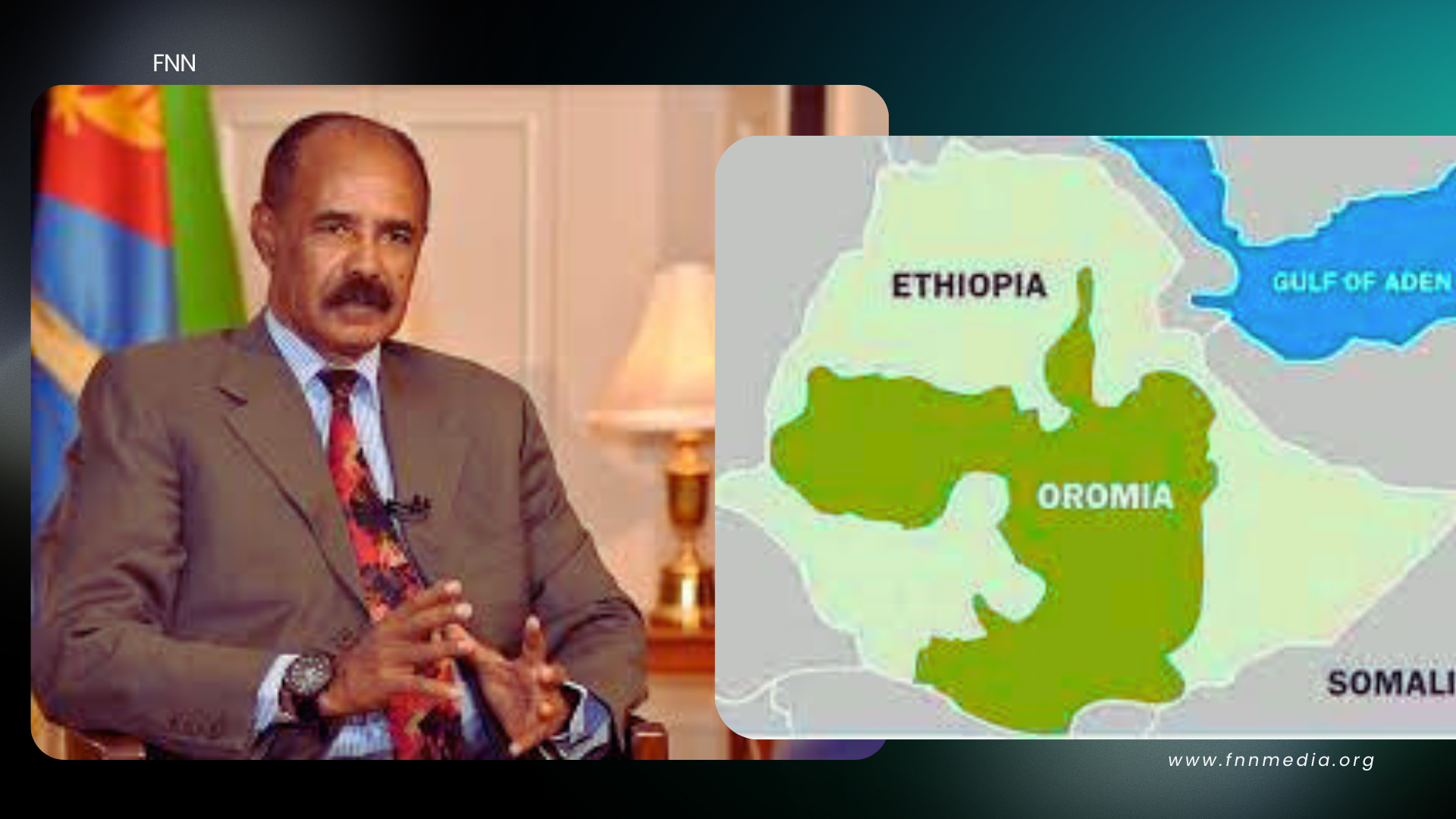
President Isaias Afwerki's recent address on the occasion of the anniversary of Eritrea's independence, as much as it was full of historical allusions and condemnations of Western imperialism, testifies to an underlying contempt for the aspirations of the Oromo people. His patronizing characterization of the "Ideology of Oromummaa" as a notion that "does not represent the Oromo people" is not just a travesty of history, but an insult to the long struggle of the Oromo nation against imperial conquest, colonial occupation, and ongoing marginalization.
The Historical Fact: The Oromo People Were Colonized Rather Than Incorporated.
Contrary to the narrative of ancient nation-state Ethiopia beset by internal identity crises, the contemporary Ethiopian state was built through imperial conquest. With economic and military aid from European powers such as Britain and France, and later Italy, Emperor Menelik II in the late 19th century expanded north-central Abyssinia to the south—to occupy Oromia. The Oromo and other southern nations were forcibly dominated by Abyssinian hegemony through violent military campaigns, massacres, enslavement, and land appropriation.
This was not nation-building—this was colonization.
The Oromo were not actors in a common national imagination; they were its victims. Their language was prohibited in schools and public life. Their Gadaa system of government, a rich indigenous democracy, was eroded and supplanted with hierarchical imperial authority. Their identity was demonized, and their lands taken for the enrichment of northern elites.
The Role of the North, Including Eritrea, in the Marginalization of the Oromo
President Isaias does not acknowledge the ongoing collaboration of northern forces—constituted by Eritrean nationalists—in maintaining the imperial framework that excluded the Oromo nation. Throughout the armed resistance against the Derg regime, Eritrean liberation forces consistently collaborated with Tigrayan and Amhara elites, groups that had similar strategic objectives but had little concern for southern peoples' rights. Ever since Eritrea became independent, Eritrean political elites have consistently favored a unitary Ethiopia that does not allow Oromo self-determination and sovereignty.
Isaias has always backed any Ethiopian government, whether it is the TPLF-dominated EPRDF or Abiy Ahmed's Prosperity Party, to preserve Ethiopia's territorial integrity and limit any significant autonomy or sovereignty for nations like the Oromo. His wish to delegitimize Oromummaa is a continuation of that colonial legacy—dismissing Oromo agency, characterizing their cultural revival as a menace, and minimizing their political ambitions to anything as harmless as "external manipulation."
Oromummaa Is Oromo Sovereignty and Self-Definition
Oromummaa is not an imposed foreign "ideology." It is the Oromo people's reclamation of their history, identity, and future. It encompasses language, culture, principles of peace (nagaa), justice (nagaa, seeraa), and cooperative governance through the Gadaa system. It is the collective consciousness of the people who were denied for centuries their right to be themselves.
The mere occurrence of Oromo agency and self-consciousness is a menace to hegemonic interests, be they domestic elites or external powers long privileged by an Oromo people’s disenfranchisement.
The Fear of Oromo Sovereignty
Isaias's anxiety is not out of concern for the well-being of Ethiopia. It is apprehension about the possible consequences of Oromo independence on the outdated imperial hierarchy of the Horn of Africa, which has benefited Isaias’s Eritrean elites. For over a century, consecutive Addis Ababa regimes—aided by neighboring actors like Eritrea—have ruled the Oromo against their desires, extracting resources while denying their fundamental rights. Any step towards actual self-rule or even talk about self-determination on the part of the Oromo is opposed and labeled as a danger to "stability."
It must be clarified that the Oromo do not dream of the destruction of others, but they fight to gain freedom, dignity, and the right to determine their own destiny. Their search is for peace grounded in justice, not peace imposed by military might or political trickery.
A Final Word
If President Isaias is indeed suspicious of foreign interference, it would suit him to consider Eritrea's own conflicted history of colonization, abandonment by imperial partners, and exclusion from African political life. He ought to understand that the same values which, guided Eritrea's struggle for self-determination are applicable to the Oromo and all nations under oppression.
The issue is not with the Oromo themselves. Rather, it lies in the consistent refusal, on the part of both the internal elites and their external supporters, to recognize the Oromo people as equals, entitled to determine their own identity and destiny.
Ignoring Oromummaa will not destroy the reality beneath. The Oromo nation is here, and no level of distortion, suppression, or local collaboration will undo that achievement. The path to lasting peace in Ethiopia and the Horn of Africa begins with decolonization, not denial.
Note: The author, Hambisa (Ph.D.), an ordained pastor in the Evangelical Lutheran Church in America, is an associate professor of accounting at Morgan State University in Baltimore, MD.
Similar posts:
There are no similar posts yet.